Introduction
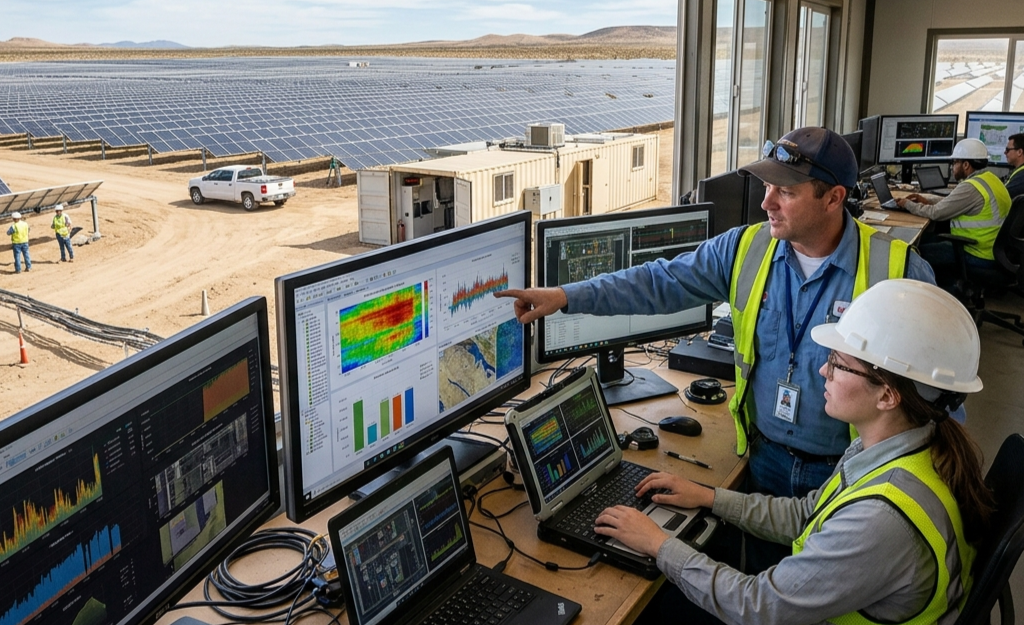
Large-scale renewable energy environments generate massive volumes of data from distributed assets, making real-time monitoring, interoperability, and analytics critical for performance optimization. However, fragmented systems and inconsistent data capture often limit visibility and slow decision-making. This case study highlights how a solar research and testing environment implemented a centralized Digital Twin framework to unify data, improve operational visibility, and enable real-time analytics. By integrating diverse systems into a single intelligent platform, the organization enhanced research accuracy, maintenance responsiveness, and scalability.
Customer
A North America–based renewable energy research organization managing a large-scale solar testing facility with thousands of distributed energy assets.
Business Objective
- Enable unified data capture across diverse solar assets and systems
- Improve real-time monitoring and operational visibility
- Enhance research accuracy through high-frequency data collection
- Reduce maintenance delays and improve response time
- Build a scalable platform for future expansion
Scope of Services
- Design and implementation of a centralized Digital Twin platform
- Integration of heterogeneous devices, systems, and protocols
- Real-time data ingestion and visualization enablement
- Development of analytics dashboards and KPI tracking
- Data consolidation into a unified database architecture
- Standardization of asset models for scalability and future onboarding
Key Challenges Addressed
- Lack of interoperability across multiple systems and vendors
- Limited visualization and absence of real-time monitoring
- Low-frequency data capture impacting research accuracy
- Fragmented data storage across platforms
- Difficulty in scaling and adding new assets
Benefits
- Unified visibility across all solar assets and systems
- Real-time monitoring enabling proactive decision-making
- Improved data accuracy and research insights
- Faster maintenance response and issue resolution
- Scalable architecture supporting future expansion
Impact
- Real-time data capture improved from low-frequency to near real-time intervals (every few seconds)
- Centralized platform enabled complete operational visibility across solar fields
- Faster maintenance response through real-time monitoring and alerts
- Scalable system design allowing seamless addition of new assets and devices